Short answer. Pick a barrel for the lowest price, quick heat-up and simple assembly. Pick a cabin for headroom, two-level benches and harsh winters. Pick a pod if you want the look of a barrel with more shoulder room and a shingled shell.
Key facts
- For the same floor area, a barrel sauna holds less air than a cabin sauna, so it tends to reach temperature sooner.
- Makers commonly quote about 30 to 60 minutes of heat-up time for an electric barrel sauna, depending on heater power and the weather.
- Most barrel saunas are about 6 to 7 feet in outside diameter, so full standing height is only available along the center line.
- Sellers typically quote one to two days for two people to assemble a barrel sauna, while a cabin sauna often takes several days.
- A cabin sauna often has insulated walls and roof and benches at two heights, which makes it the usual choice for cold winters.
The three shapes in brief
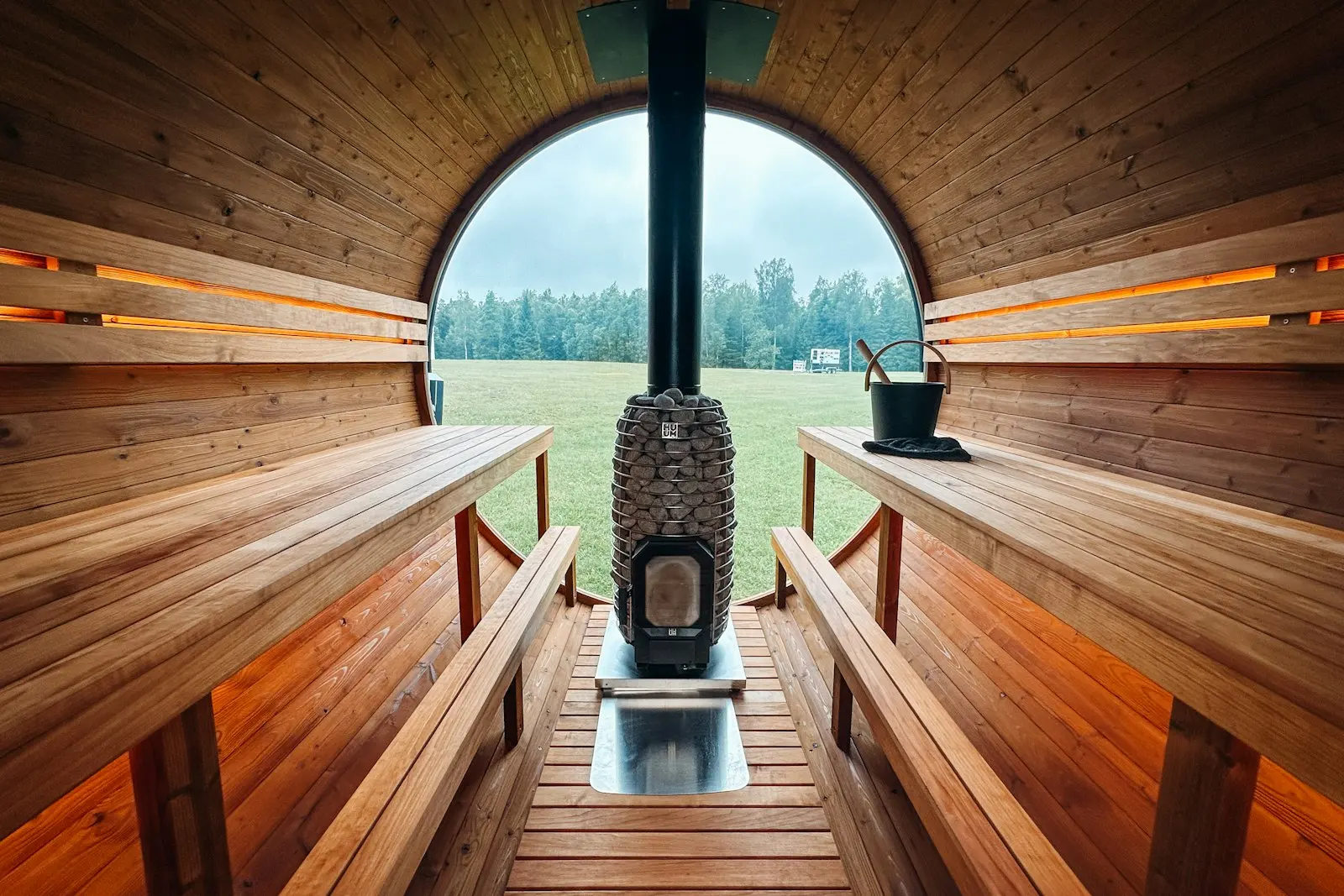
An outdoor barrel sauna is a cylinder on cradles. Long staves fit together like the sides of a cask, and steel bands hold them tight. Two benches face each other along the length.
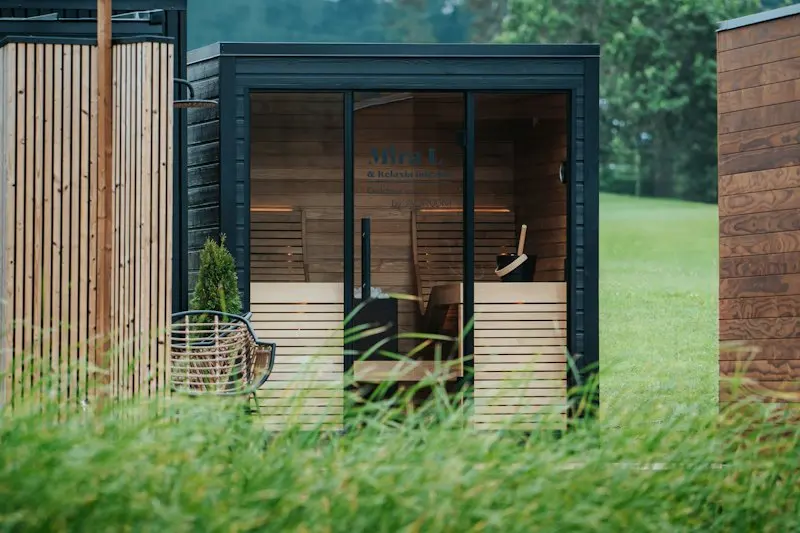
A cabin sauna is a small building. It has straight walls, a floor, a framed roof and often insulation in the walls. Benches can sit at two heights, like in a classic sauna room.
A pod sauna has a rounded or teardrop profile, wider at bench height than a barrel, with a shell usually covered in shingles.
Side by side
| Barrel | Cabin | Pod | |
|---|---|---|---|
| Heat-up | Typically the quickest, less air to heat | Typically the slowest, more air and more wood | In between |
| Headroom | Full height only along the center line | Full height across the room | Better than a barrel at the sides |
| Bench layout | Two facing benches, one level | Upper and lower benches, L shapes possible | Facing benches, sometimes two levels |
| Rain | Sheds water, but stave joints move | Roofed and sealed like a shed | Shingled shell sheds water |
| Snow | Curve sheds snow | Depends on roof pitch and rating | Curve sheds snow |
| Insulation | Usually solid wood only | Often insulated walls and roof | Varies by model |
| Assembly | Simplest, about one to two days | Longest, often several days | About one to two days |
| Price level | Lowest for a given size | Highest | Middle to high |
These are general patterns from published specifications, not test results. Individual models can break the pattern, so read the spec sheet.
Heat-up time
For the same floor area, a round room holds less air than a square one. That is the main reason a barrel tends to reach temperature sooner. Makers commonly quote about 30 to 60 minutes for an electric barrel, depending on heater power and the weather.
A cabin has more air and more wood to warm. An insulated cabin can make up for that in cold weather, because it loses less heat through the walls. In a mild climate, insulation matters less. In a cold one, it can matter more than shape. Heater choice plays a big part too, as we explain in wood burning vs electric sauna heater.
Headroom and bench layout
Most barrels are about 6 to 7 feet in outside diameter. You can stand upright along the middle, but the wall curves in at your shoulders when you sit. Tall people notice it.
Heat rises, so the upper bench of a cabin is the warm seat and the lower bench is the milder one. A single-level barrel does not give that choice. On the other hand, the facing benches of a barrel are good for talking, and they are often long enough to lie on.
Rain and snow
A barrel has no flat surface for water to sit on. Its weak point is the joints between staves. Wood swells when wet and shrinks when dry, so gaps can open and close through the year. The bands need tightening now and then. Many kits offer shingles or a roof cover over the top half. It is worth having in a wet climate.
A cabin handles weather like any small building. Look at the roof pitch, the roofing material and the overhang above the door. In heavy snow areas, ask the seller for the snow load rating and compare it with what your building department requires.
Footprint and placement
A barrel rests on two or more cradles, so it needs a level pad about as wide as the barrel and as long as the room plus any porch. A cabin needs support under its whole floor frame. In both cases, leave space to walk around for upkeep, and room for the door to swing open.
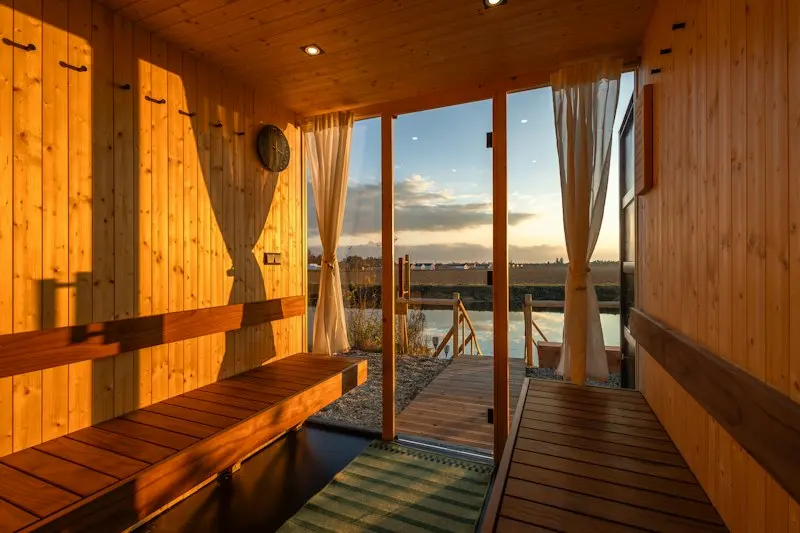
A porch or changing room adds length without adding hot room. Check which part of the stated length is the sauna room itself. Our outdoor sauna sizes guide lists typical footprints.
Assembly
A barrel is the simplest build. You set the cradles, slot the staves around the end walls and tighten the bands. Sellers typically quote one to two days for two people.
A cabin has more steps: floor frame, walls, roof, roofing, trim and sometimes insulation and interior lining. Plan several days, or hire help. If you are new to kits, start with how to choose an outdoor sauna kit.
Which one to pick
- Barrel: tighter budget, mild to moderate climate, two to four regular users.
- Cabin: cold winters, tall users, or you want upper and lower benches.
- Pod: you like the rounded look and want a little more room at the shoulders.
Common questions
Does a barrel sauna heat up faster than a cabin sauna?
Often, yes, for the same floor size. A round room holds less air than a square one, so the heater has less to warm. Insulation, heater power and outdoor temperature matter as much, so compare the heat-up time each maker publishes.
Do barrel saunas leak?
A barrel is made of staves that swell and shrink with moisture. Small gaps can open in dry weather and close when the wood swells. Many owners add a roof cover or shingles. Check what the kit includes and how the maker says to tighten the bands.
Which sauna shape is best for snow?
A cabin with a pitched, insulated roof is the usual choice for heavy snow. Barrels and pods shed snow well because of their curve, but check the snow load rating if the maker publishes one.
Can you lie down in an outdoor barrel sauna?
Yes, if the benches are long enough. Barrel benches run along the length of the room, so a barrel about 7 or 8 feet long gives a bench most adults can lie on. Check the inside length on the spec sheet.