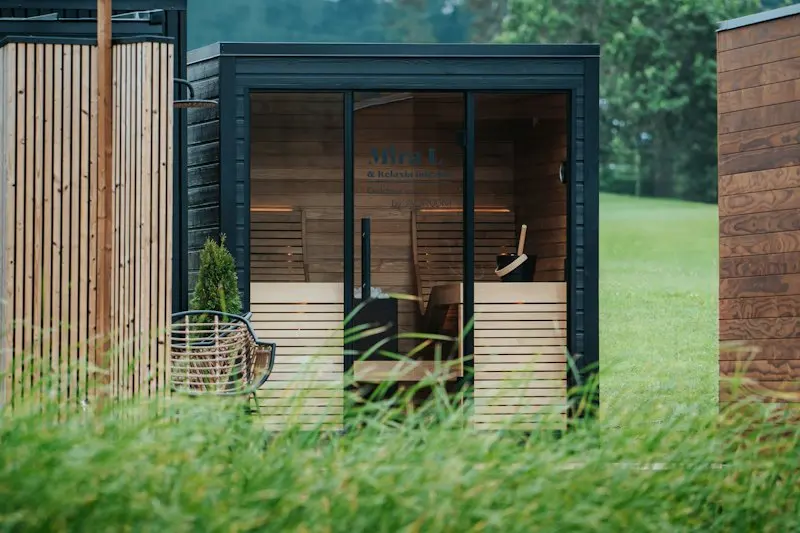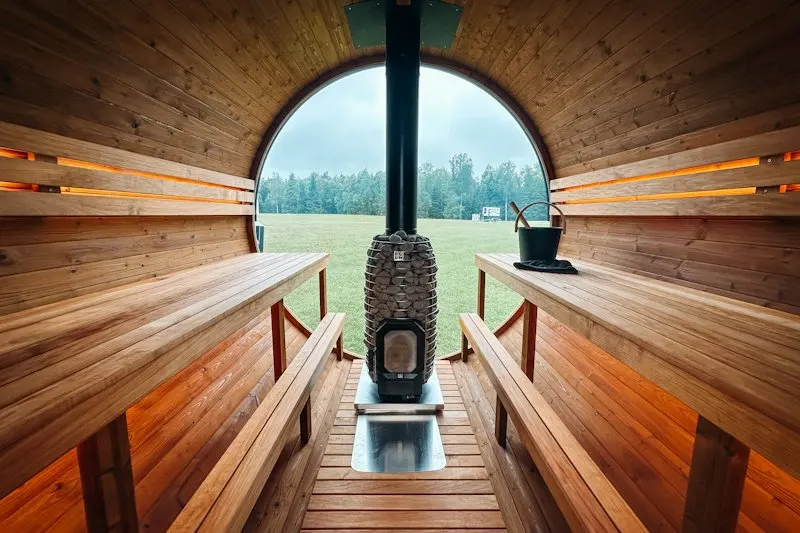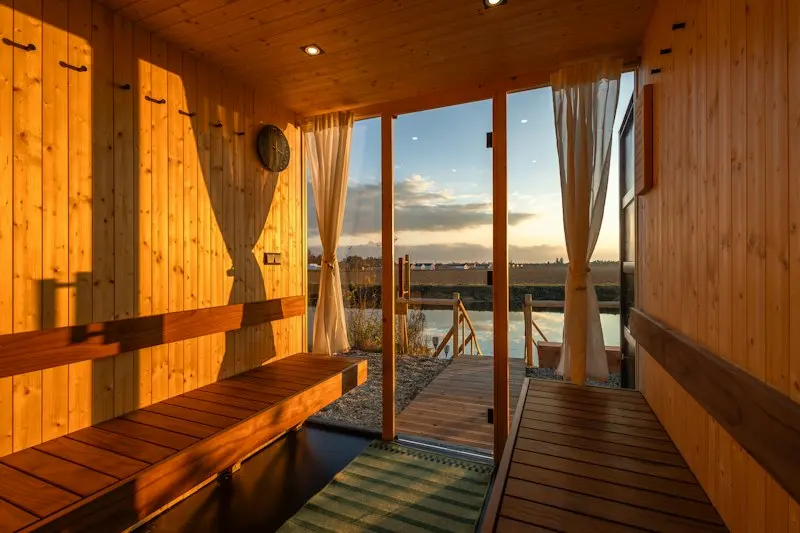
Short answer. Cedar is the premium pick: it resists rot, smells pleasant and has few knots. Thermally modified wood is the practical rival for wet climates. Spruce and pine cost the least and need the most care. Hemlock is better suited to covered or sheltered spots.
Key facts
- Western red cedar contains natural oils that slow rot and deter insects, which makes cedar the premium and most expensive wood for an outdoor sauna.
- Thermally modified wood is ordinary wood, often spruce, pine or aspen, heated in a kiln so it becomes more stable and rot resistant without chemical preservatives.
- Spruce and pine are the lowest priced outdoor sauna woods and the least durable outdoors when untreated, so they need an exterior finish renewed every few years.
- Hemlock has little natural rot resistance, so a hemlock sauna is better suited to a covered patio or a sheltered spot than to full outdoor exposure.
- Solid wood barrel saunas are commonly built from staves about 1.5 inches thick, and board thickness affects how well the room holds heat.
Side by side
| Cedar | Thermally modified wood | Spruce or pine | Hemlock | |
|---|---|---|---|---|
| Rot resistance | Naturally high | High after treatment | Low to moderate | Low |
| Stability | Good, little warping | Very good | Moves more with moisture | Fair |
| Scent | Distinct, aromatic | Mild, toasted note when new | Light resin scent | Almost none |
| Knots | Few in clear grades, more in knotty grades | Depends on the base wood | Common | Few |
| Outdoor upkeep | Low to moderate | Low to moderate | Highest | High if exposed |
| Price level | Highest | Middle to high | Lowest | Low to middle |
This table sums up general traits reported by makers and wood suppliers. Grade, board thickness and build quality change the picture, so read the spec sheet of each kit.
Cedar
A cedar outdoor sauna is the reference most other kits are measured against. Western red cedar contains natural oils that slow rot and deter insects. It is light, it moves little as it gets wet and dries, and it stays comfortable to the touch at high heat.
Two things to check. First, the grade. "Clear" cedar has almost no knots and costs the most. "Knotty" cedar is cheaper and still weathers well, with a more rustic look. Second, the scent. Most people like it, but it is strong in a new sauna. If you are sensitive to wood scents, consider a milder wood.
Thermally modified wood
This is ordinary wood, often spruce, pine or aspen, heated to a high temperature in a kiln. The process changes the wood so it takes up less moisture. The result is darker, more stable and much more rot resistant than the same wood untreated. No chemical preservatives are involved.
It has become a common choice for outdoor saunas, especially barrels and pods. It handles wet weather well and usually costs less than clear cedar. The trade-off is that the wood becomes a little more brittle, so drive screws with care during assembly. The brown color fades to gray in the sun unless you apply an exterior finish.
Spruce and pine
These are the classic woods of entry-level kits. They are affordable, easy to work with and pleasant inside the hot room. Outdoors, untreated, they are the least durable of the four.
They can still last if you look after them. Plan on an exterior stain or finish from the first season, renewed every few years, plus a good roof and a base that keeps the wood off wet ground. Expect more knots. Knots can ooze resin when hot, and a knot on a bench or backrest can feel hotter than the wood around it. Look for kits that use knot-free boards for the benches.
Hemlock
Hemlock is pale, smooth, nearly knot-free and has almost no scent. It is very common in indoor saunas. It has little natural rot resistance, so it is less suited to full outdoor exposure.
You will mostly see it in saunas meant for a covered patio or a sheltered spot, or used for the interior of a cabin with a different wood outside. If a listing says hemlock and "outdoor," check what protects the outside: a roof, a finish, cladding or a cover.
Upkeep that applies to every wood
- Keep it off the ground. A draining base matters more than the species. See the foundation section in how to choose an outdoor sauna kit.
- Protect the top. A roof cover or shingles keep standing water off the wood.
- Finish the outside. Use a product made for exterior wood, as the kit maker recommends.
- Leave the inside bare unless the maker names a product made for sauna interiors.
- Air it out. Open the vents or the door after use so the room dries.
- Tighten the bands on a barrel as the staves settle. See barrel sauna vs cabin sauna.
Wall thickness matters too
Species is only half the story. Board thickness affects how well the room holds heat and how sturdy it feels. Solid wood barrels are commonly built from staves about 1.5 inches thick. Cabins vary more, and some add insulation. Compare thickness on the spec sheet, not just the wood name.
How to choose
- Wet or humid climate: cedar or thermally modified wood.
- Dry climate and a tight budget: spruce or pine, with a finish and a roof.
- Sensitive to scent: thermally modified wood or hemlock in a sheltered spot.
- Lowest upkeep: cedar or thermally modified wood, still with a finish outside.
Wood is one of the main price drivers of a kit. To see how it fits in the full budget, read what an outdoor sauna costs.
Common questions
Is cedar the best wood for an outdoor sauna?
Cedar is a strong choice because it resists rot naturally, stays stable and has few knots in the better grades. It is also the most expensive of the common options. Thermally modified wood offers similar weather resistance at a lower or similar price.
What is thermally modified wood?
It is wood, often spruce, pine or aspen, that has been heated to a high temperature in a controlled kiln. The process makes it darker, more stable and more resistant to rot. It uses heat and steam, not chemical preservatives.
Do I need to treat the outside of an outdoor sauna?
Most makers recommend an exterior finish or stain rated for outdoor wood, renewed every few years, even on cedar. Untreated wood turns gray in the sun. Follow the care instructions of the kit, since the warranty may depend on it.
Should I seal the wood inside the sauna?
Usually not with ordinary stains or varnish, which are not made for high heat. Many makers say to leave interior walls bare or use only a product made for sauna interiors. Check the manual.