Short answer. Choose electric if the sauna sits within reach of your panel and you want to set a temperature and walk away. Choose wood if the sauna is far from power, you have a supply of dry firewood, and your local rules allow a wood stove.
Key facts
- Most electric heaters for outdoor saunas run on 240 volts, are hardwired, and commonly need a dedicated circuit of about 30 to 50 amps depending on the kW rating.
- Electric heaters for home outdoor saunas are commonly about 4.5 to 9 kW, while wood burning sauna stoves are rated by room volume.
- Published heat-up times for both electric and wood burning sauna heaters typically fall around 30 to 60 minutes for a small or mid-size room.
- A wood burning outdoor sauna needs no power for heat, but it needs a chimney, clearances to wood, a non-combustible floor pad and a check of local burn rules.
Side by side
| Electric heater | Wood burning stove | |
|---|---|---|
| Power supply | Usually a hardwired 240 V circuit | None for the stove |
| Typical size | About 4.5 to 9 kW for home saunas | Rated by room volume |
| Installation | Licensed electrician, often a trench | Chimney, heat shields, floor protection |
| Heat-up | Typically about 30 to 60 minutes | Typically about 30 to 60 minutes, depends on the fire |
| Control | Thermostat and timer | By hand, with air intake and wood |
| Rules to check | Electrical permit | Burn rules, chimney and clearance rules |
| Upkeep | Low | Ash, chimney sweeping, firewood |
| Running cost | Electricity per session | Firewood, low if you have your own |
These are common ranges from published specifications. Each heater has its own figures, so read its manual and spec sheet.
Electric: the wiring is the project
An electric heater is simple to live with. You turn it on, it holds the set temperature, and a timer shuts it off. The work is in getting power to it.
Most heaters for outdoor saunas run on 240 volts and are hardwired, not plugged in. They commonly need a dedicated circuit of about 30 to 50 amps, depending on the kW rating. The right breaker and wire size depend on the heater and on the distance from your panel. That is a job for a licensed electrician, not a guess from a chart.
Ask the electrician about these points before you order:
- Panel capacity. An older or full panel may need an upgrade or a subpanel.
- The run. Outdoor wiring usually goes in conduit in a trench. A long run costs more.
- Disconnect and protection. Local code decides what is required near the sauna.
- Permit. Many towns require an electrical permit and an inspection.
The electrical work is often the largest cost outside the kit. We break it down in what an outdoor sauna costs.
Wood burning: chimney, clearances and rules
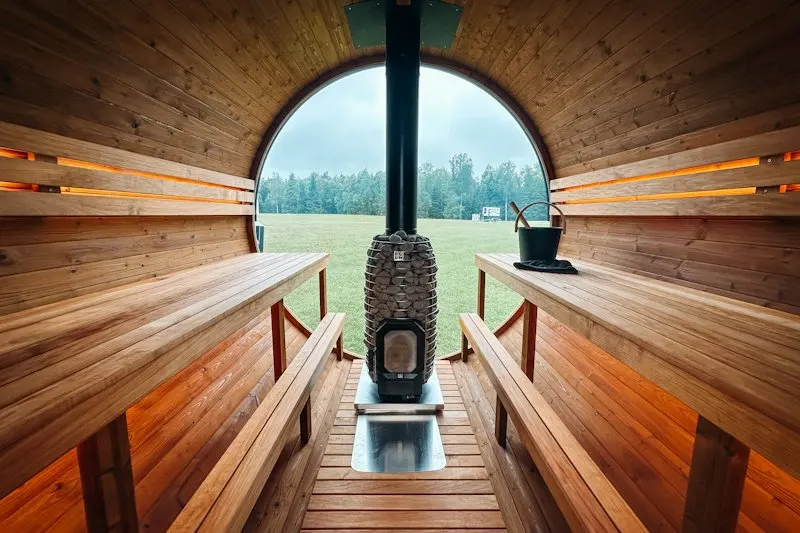
A wood burning outdoor sauna needs no power for heat. That makes it the natural choice for a cabin, a lake lot or the far corner of a large yard. Some owners simply prefer a real fire.
The trade is a different set of jobs.
- Chimney. The flue passes through the roof or wall with insulated pipe and a proper flashing. Check which chimney parts the kit includes.
- Clearances. Every stove manual lists minimum distances to walls, benches and ceiling. Heat shields can reduce some of them. Follow the manual exactly.
- Floor protection. A non-combustible pad under and in front of the stove is standard.
- Burn rules. Some towns and air quality districts limit wood stoves, require approved models or ban burning on certain days. Homeowners associations may also say no.
- Insurance. Tell your home insurer. Some ask for details on a wood stove in an outbuilding.
Call your building department before buying. A wood stove you are not allowed to light is an expensive mistake.
Heat-up time
Published heat-up times for both types typically fall around 30 to 60 minutes for a small or mid-size room. Cold weather, a big room and an undersized heater all add time.
With electric, the wait is predictable, and many controls let you set a delayed start. With wood, the result depends on you: dry, split hardwood and a well-built fire heat the room quickly, while damp wood does not. You also need to be there to light it and feed it.
Either way, the heater must match the room. See outdoor sauna sizes for how to size by volume.
Upkeep
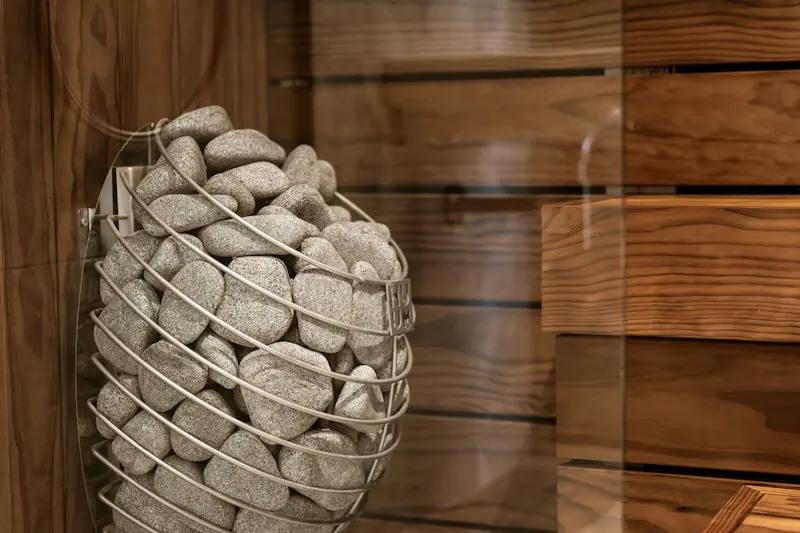
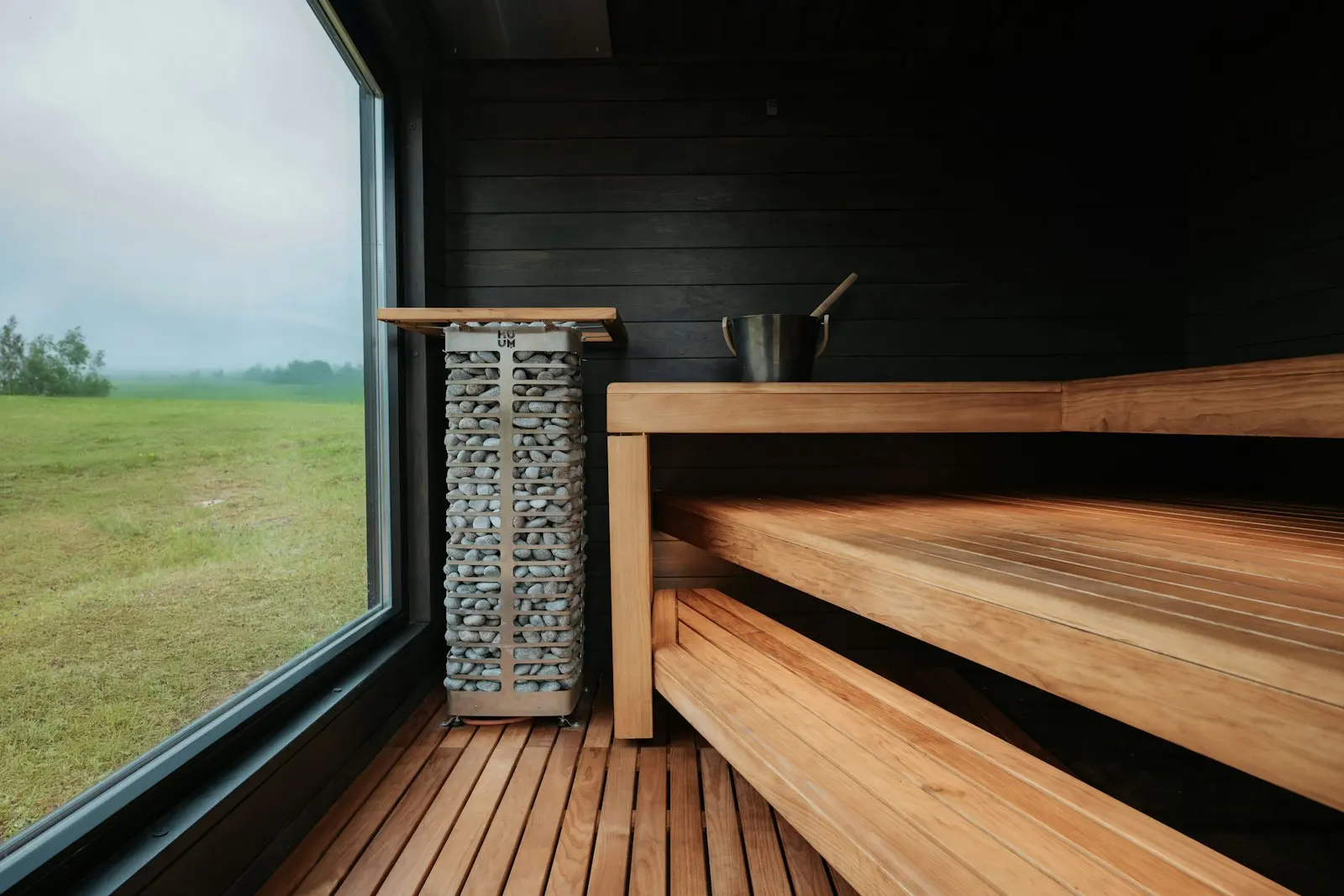
An electric heater asks for little. Restack the stones from time to time, replace cracked ones, and have a heating element changed if it fails after years of use.
A wood stove needs regular care. Empty the ash, sweep the chimney as often as the maker and your local fire rules advise, and check the door seal and the pipe joints. You also need a dry place to store firewood.
How to decide
- Check the rules. If wood stoves are restricted where you live, the choice is made.
- Get an electrical quote. If the run is short and the panel has room, electric is easy. If the quote is high, wood looks better.
- Think about weekdays. If you want a short session after work, a timer helps. If the sauna is a weekend ritual, tending a fire can be part of it.
- Look at the kit. Not every model is offered with both heater types. See how to choose an outdoor sauna kit.
Common questions
Does an electric outdoor sauna heater need 240 volts?
Most do. Electric heaters for outdoor saunas are commonly 4.5 to 9 kW and run on a hardwired 240 volt circuit. The breaker and wire size depend on the heater and the length of the run. A licensed electrician should size and install it.
Is a wood burning outdoor sauna allowed where I live?
It depends on your town, county and sometimes your homeowners association. Some areas limit wood stoves, require approved models or ban burning on poor air quality days. Ask your building department and local air quality agency before you buy.
Which heats up faster, wood or electric?
It varies. Makers typically quote about 30 to 60 minutes for either type in a small to mid-size room. A wood stove depends on the fire you build and the firewood. An electric heater is more predictable and can often be started on a timer.
Can I pour water on both types of heater?
Most traditional sauna heaters, wood or electric, hold stones meant to take small amounts of water. Check the manual of the heater first, because the maker sets how much water is acceptable.